Your business requires routine sanitation based upon potential hazards, food processing capacity, food allergen presence, and regulatory checks, plus documented records demonstrating HACCP compliance, inspection results, and government health requirements. The information below describe critical cleaning system elements.
Key Takeaways
- Brampton food safety cleaning experts maintain restaurants, grocery departments, commissaries, warehouses, bakeries, schools, mobile vendors, and allergen-sensitive operations.
- Compartmentalized approaches treat frequently contacted areas, food-contact equipment, kitchens, floors, drains, restrooms, and storage areas for eliminating cross-contamination.
- Documentation of conclusion through checks, reviews, and corrective-action records verifies certified specialists have verified proper chemical concentration, suitability, and contact time.
- Risk, output capacity, format changes, accidents, and regulations should direct cleaning calendars, with routine, weekly, and annual activities allocated by zone.
- Providers should possess hazard analysis knowledge, health regulatory understanding, WHMIS education, coverage, credentials, color-categorized instruments, and audit-ready cleaning documentation.
Food Safety Cleaning Requirements for Brampton Venues
Food safety cleaning is essential for any Brampton facility that processes, stores, prepares, packages, or serves food. Apply it to your facility if it comes under health inspections, food codes, or HACCP requirements. This includes restaurants, cafeterias, commissaries, grocery food departments, butcher shops, seafood counters, convenience stores, and institutional kitchens.
Proper sanitation protocols is additionally essential in storage warehouses, production plants, freezer facilities, bakeries, school nutrition services, reception halls, and meal delivery centers. Portable and seasonal operations count as well, discover here such as food trucks, event vendors, and temporary stalls. Your facility requires written cleaning standards when your employees handle raw materials, divide prepared foods, warm meals, or maintain allergen storage. In Brampton, sanitation continues to be not optional; it comprises regulatory, business, and safety requirements.
What Services Do Brampton Cleaning Experts Provide?
Your facility requires professional cleaners who sanitize all high-touch areas, cooking and food prep areas, floors, and restrooms to maintain food safety compliance and public health standards. These specific areas are emphasized due to their elevated cross-contamination potential, trip and slip dangers, and breaches of sanitation codes.
If you grasp what they sanitize, you'll successfully ensure your facility meets all operational and regulatory compliance needs.
Key High-Touch Surface Sanitizing
develop a disinfection plan
by swapping cloths, following one-way workflows, and separating disinfection tools organized by section
Cooking Zones, Walking Surfaces, and Restroom Environments
Expect Brampton cleaning experts to target kitchens, floors, and restrooms because each area carries unique food safety, slip-and-fall, and sanitation risks. In industrial kitchens, you need degreasing on cook lines, equipment exteriors, drains, prep surfaces, and splash zones to reduce contamination and pest pressure.
Floor care that is documented should equally be anticipated. Technicians scrub and extract buildup from tile grout, ceramic surfaces, and vinyl floors, then apply correct drying techniques so you can limit falls and maintain code-compliant conditions. They also handle entryways where moisture and debris migrate indoors.
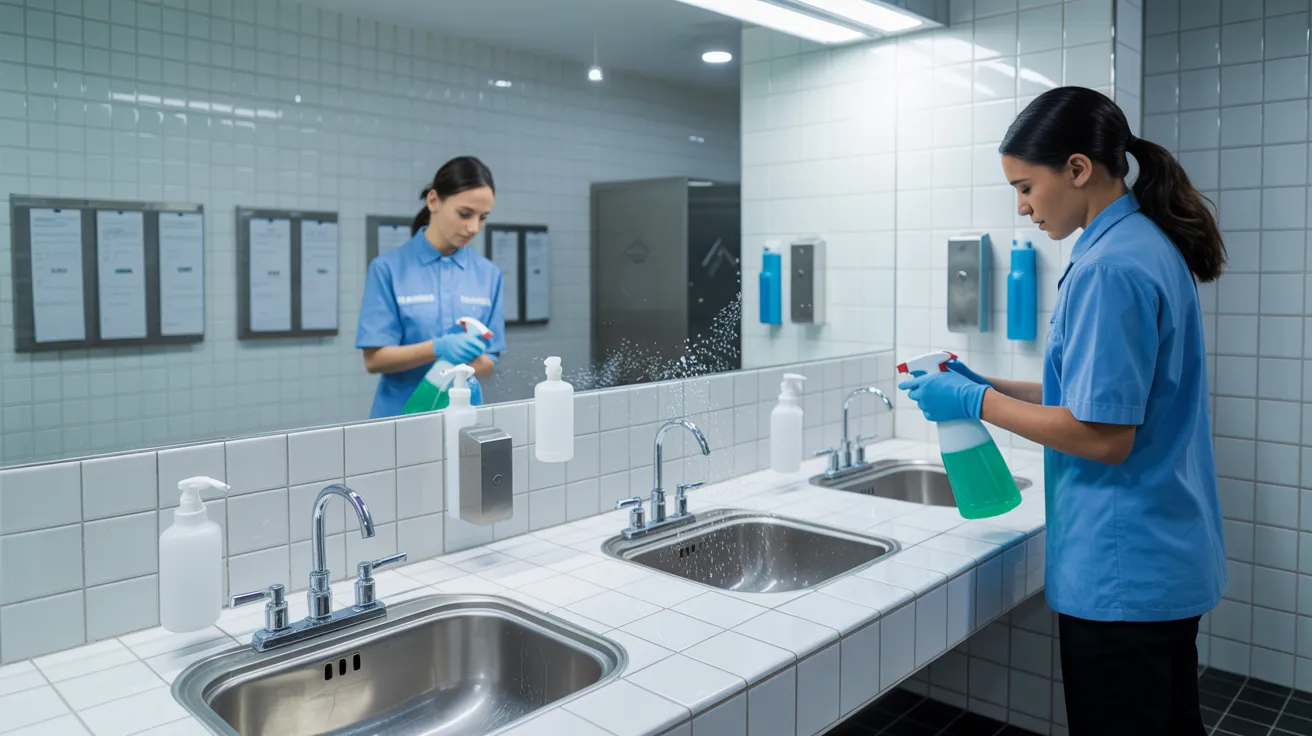
In restrooms, cleaners treat touchpoints, fixtures, partitions, dispensers, and waste containers then refill supplies and eliminate odor. They also service restaurant moprooms, where chemical storage, sink hygiene, and drainage conditions can affect sanitation compliance and staff safety daily.
Why Food Safety Cleaning Matters in Brampton
Brampton operations demand food-safe cleaning standards to meet compliance obligations and pass inspections. You also reduce bacterial spread through proper cleaning of food-preparation surfaces, appliances, and frequently-touched items. Most importantly, you help protect public health by lowering the risk of foodborne illness in your facility.
Food Safety Regulations
Brampton food establishments must comply with rigorous sanitary regulations, so sanitation practices is essential to meeting health codes, ensuring the safety of customers, and sidestepping penalties. You must maintain clean food preparation areas, documented cleaning schedules, appropriate product handling, and documented employee protocols that correspond to municipal and provincial inspection expectations.
Detailed cleaning files enable you to prove due diligence during compliance reviews and confirm your procedures remain reliable, consistent, and overseen. Comprehensive sanitation moreover facilitates allergen control by decreasing buildup on mutual appliances and high-touch areas.
Cross-Contamination Management
Adhering to regulatory guidelines requires your expertise in stopping cross-contamination throughout daily food handling and cleaning. You need to separate raw ingredients from ready-to-eat foods, clean prep surfaces between tasks, and keep chemicals away from food-contact items. Organized systems minimize contamination events and maintain ongoing regulatory adherence.
Implementing allergen segregation helps keep priority allergens from contacting shared surfaces, containers, or equipment. Utilize separate boards, color-labeled items, and clear tool marking so staff don't mix items during preparation or service. Enforce hand hygiene following fresh proteins, aquatic items, egg products, or allergen materials. Refresh cleaning cloths often, and verify sanitizer strength with test strips. When you train staff to follow these controls every shift, you establish a more hygienic, safer workplace that satisfies Brampton's food safety needs daily.
Public Health Safeguarding
Should food safety cleaning collapse, you don't simply risk a failed inspection—you increase the potential of contamination-related sickness harming customers, staff, and the wider Brampton population. You also weaken your role in protecting public health, especially in high-traffic food premises where contamination can spread quickly through surfaces, equipment, and touchpoints.
You must implement sanitation protocols that eliminate contaminants, properly disinfect, and ensure effectiveness. This involves maintaining exposure times, deploying approved disinfectants, recording schedules, and coaching staff to meet compliance standards. These actions support pathogen control by suppressing pathogens before contaminating food or hands. In Brampton, robust sanitation protects at-risk groups, curtails outbreak likelihood, and demonstrates accountability. When you adhere to proper protocols, you go beyond regulations—you substantially reduce risk and advance safer food handling throughout the city.
How Can Cleaning Practices Ensure Food Safety Compliance?
Establishing thorough cleaning protocols improves food safety compliance by minimizing contamination hazards, preventing pathogen multiplication, and positioning your facility in accordance with sanitation requirements under HACCP-based programs and public health regulations. You ensure that contact surfaces are visibly clean and microbiologically controlled, facilitating documented preventive controls and inspection readiness.
Well-executed cleaning efforts also enhance allergen prevention by removing residues that can trigger undeclared allergen exposure.
What's the Right Time to Plan Commercial Cleaning?
Cleaning plans work best when you create them according to risk factors, production rates, and legal standards rather than relying on a fixed calendar alone.
Establish weekly or monthly maintenance for drains, ventilation systems, storage racks, and hard-to-reach areas, determined by inspection findings and sanitation records. Set aside seasonal deep cleaning for shutdowns, weather-related soil buildup, or pest-pressure periods
How Do You Choose Brampton Cleaning Experts?
Begin by evaluating providers based on sanitation compliance standards—not solely on budget. You should confirm that each organization comprehends CFIA, public health, and HACCP-based requirements applicable to your facility. Request proof of insurance, WHMIS compliance, staff training documentation, and oversight procedures. Assess whether technicians recognize cross-contamination risks, chemical handling protocols, and verifiable sanitation records.
You should further examine operational reliability and answerability. Request references from food facilities in Brampton, then review reply speed, corrective-action procedures, and communication standards. Validate the company supports supplier audits and can supply compliance documentation to regulators or third parties. Confirm equipment is maintained, colour-coded tools are applied correctly, and facility-specific risks are recognized. A qualified provider protects compliance, product quality, and your brand reputation.
Which components are contained in a Food Safety Cleaning Plan?
Establish a documented program that establishes every sanitation task, standard, and responsibility ahead of production commencement. You should specify cleaning intervals, permitted substances, dilution percentages, exposure times, instruments, and inspection methods for each zone, surface, and piece of equipment. Add pre-operational inspections, corrective actions, and employee training requirements.
Your framework should also cover cross-contamination controls, waste handling, pest-prevention measures, and documented schedules for bathrooms, drainage, ground surfaces, and food-handling zones. Specify how you'll separate raw and ready-to-eat processes, help with ingredient tracking, and maintain accurate allergen labeling through validated cleaning between product changes. You should establish accountability, preserve signed records, and check results against regulatory standards, HACCP controls, and customer requirements. When gaps appear, adjust procedures immediately and re-educate staff.
Frequently Posed Questions
Will sanitation providers handle nighttime hours at Brampton facilities?
Yes, you can schedule cleaning services to support nighttime operations in Brampton facilities. You'll arrange nighttime cleaning around production windows, security measures, and personnel needs. Providers typically map overnight procedures to minimize interruption, ensure adherence, and record finished work. You should confirm response times, oversight, lockout procedures, and waste handling before service begins.
Can sanitation professionals handle hazardous incidents?
Yes, you can discover many Brampton cleaning professionals providing hazard containment services. They handle hazardous incidents, evaluate risks, contain affected zones, and initiate rapid cleanup to minimize exposure and avoid operational impact. You should verify response rates, credentials, PPE measures, and waste procedures. If your facility must meet compliance standards, pick a provider that tracks incidents, adheres to standards, and ensures audit compliance.
Are green disinfectants suitable for food preparation areas?
Absolutely, plant-based sanitizers prove to be suitable for food-contact surfaces when you opt for products labeled food safe and satisfying regulatory requirements. You must validate contact times, mixing proportions, and rinse protocols ahead of deployment. Plant-derived products lower chemical hazards, though you require evidence of effectiveness against specific pathogens. For keeping surfaces residue-free, adhere to exact manufacturer guidelines and ensure your cleaning agent complies with applicable food industry sanitation standards.
Can cleaning schedules be tailored for seasonal production changes?
Yes, you can tailor cleaning schedules for seasonal shifts. You should revise frequencies, staffing, cleaning agents, and confirmation procedures to match seasonal workflows while upholding regulatory adherence. You'll decrease equipment downtime by organizing sanitation around equipment transitions, high demand periods, and usage patterns. You should also update written procedures, instruction programs, and monitoring protocols to capture temporary risks, additional allergens, or elevated soil levels. Continuous reviews ensure your strategy effective.
Do professional cleaners coach your team in sanitation best practices?
Yes, professional cleaning services often train your team on hygiene standards. You get staff training on correct chemical application, contact times, cross-contamination prevention, equipment disassembly, and documentation. They typically align instruction with HACCP, GMP, and CFIA or regional health department regulations. Many perform hygiene inspections to verify compliance, spot deficiencies, and strengthen remedial steps. This helps you maintain consistent procedures, succeed in audits, and minimize contamination hazards regularly.
Closing Remarks
By collaborating with Brampton commercial cleaning and food safety professionals, you aren't simply tidying—you keep your operation inspection-ready and your standards in compliance. From kitchens to processing floors, every sanitized surface and organized space decreases contamination and prevents costly issues. By scheduling cleanings at appropriate intervals and following a documented cleaning plan, you protect staff members, customers, and your standing. In a strictly regulated industry, hygienic conditions are mandatory—they're key to business compliance.